(It’s been a minute – life ran away from me!) 🏃♀️💨
Last month, we spoke about what genes do (recap: they encode proteins), and their crucial role in protein production. But what exactly do we need proteins for?
Well, just about everything, it turns out.
Proteins are large complex molecules made up of polypeptide (i.e.: amino-acid) chains, as we learned last month. To recap: genes encode proteins, and proteins are made through the process of transcription and translation, where genes are ‘read’ (3 DNA bases or ‘nucleotides’ at a time) and ‘translated’ into amino acid (‘polypeptide’) chains. These chains then fold into a unique 3D structure to form a protein. There are 20 amino acids in the human body, and the sequence of amino acids in a protein’s polypeptide chain determines its structure and function.
Proteins play many critical roles in the body, and are responsible for the structure, function, and regulation of the body’s tissues and organs. Antibodies, enzymes, and hormones are all proteins in the body.
Here’s a table listing some examples of proteins:
| Protein Type | Description | Examples |
| Antibody | Antibodies form part of the body’s immune response – they bind to specific foreign particles (e.g.: viruses, bacteria, allergens) to protect the body. | Immunoglobulin E (IgE) – responsible for allergic reactions and allergic diseases (asthma/ rhinitis) Immunoglobulin G (IgG) – responsible for the body’s response to infections |
| Enzyme | Enzymes are responsible for almost all the chemical reactions in our cells. They also help in transcription/ translation to form new proteins from genes. | RNA polymerase – this protein is a key enzyme in the process of transcription |
| Messenger | Messenger proteins (e.g.: some hormones) transmit signals to coordinate biological processes between different cells, tissues, and organs. | Insulin Testosterone Growth Hormone |
| Structural component | These proteins provide structure and support for cells. On a larger scale, they also allow the body to move. | Collagen Keratin Actin & Myosin – present in muscle fibers and work together for muscle contraction |
| Transport/ storage | These proteins bind and carry atoms and small molecules within cells and throughout the body. | Hemoglobin – responsible for transporting oxygen around the body in red blood cells Ferritin – helps the body store iron |
Variations in DNA/ genes between people mean that there will be some variation in proteins made by different individuals – this will be why some people have different skin elasticity. Similarly, an error or ‘mutation’ in our genes can increase our susceptibility to disease.
For example, in patients with sickle cell anemia, an error in the DNA means that in the gene coding for hemoglobin, one nucleotide reads ‘CAC’ instead of ‘CTC’. When the mRNA is translated, this changes the amino acid produced in the polypeptide change from Glutamic Acid to Valine, and this alters the structure and function of hemoglobin itself – it becomes ‘sickle’-shaped and less effective at carrying oxygen causing patients to feel constantly tired.

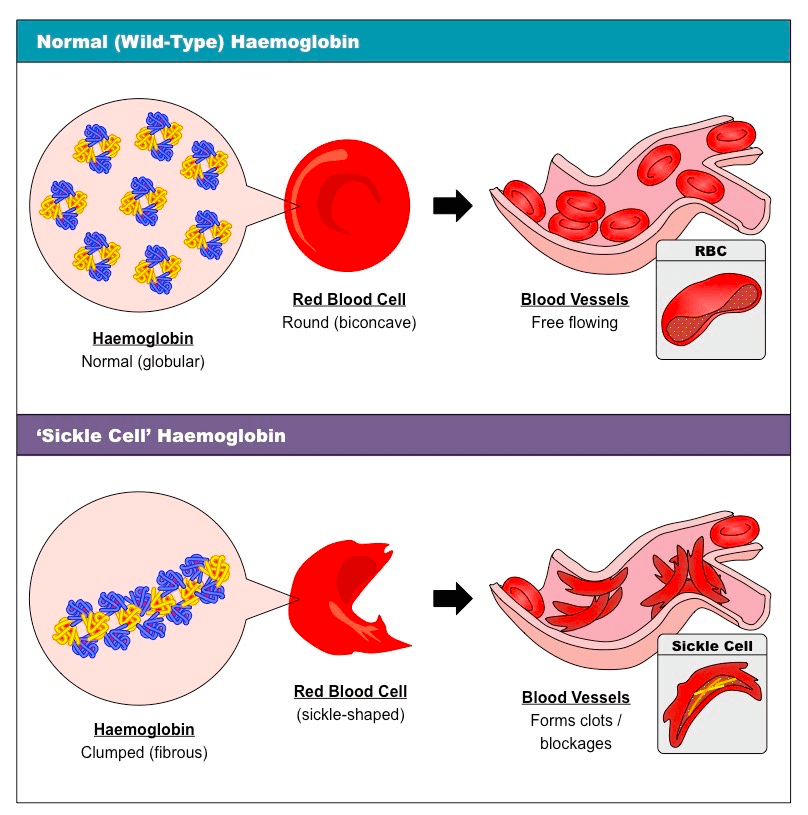
Interestingly, although we view sickle cell anemia as a pathological disease, there is evidence that having sickle-shaped hemoglobin may protect against malaria infection. So in populations with a high malaria prevalence, sickle cell anemia may have conferred an evolutionary benefit. More on that here.
To consolidate this information, here’s a great video re-iterating all of the above:
And now that we know what genes and proteins do, we can get into the fun stuff!
 Genomics For Dummies
Leave a reply to How do mRNA vaccines work? 🦠 – Genomics For Dummies Cancel reply