Sequencing DNA simply means examining DNA, and determining the exact order of the components (i.e.: nucleotide bases – A, T, C, & G) in a strand of DNA. So when we sequence a human genome, we find out the exact sequence of someone’s unique 3 billion letters of DNA.
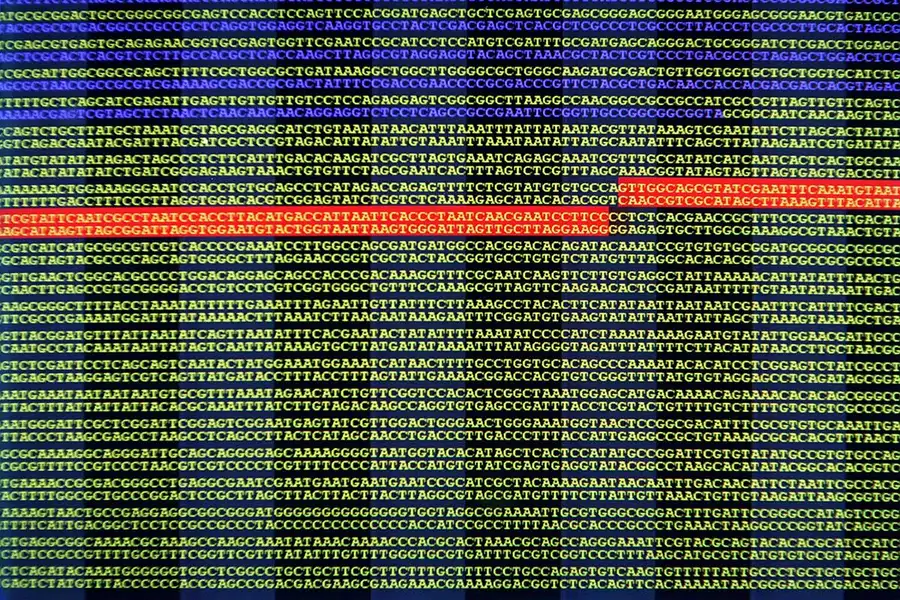
here’s a snippet of what that a human genome sequence would look like
We can use DNA sequencing in many many ways – and this is why genomics exists!
- In diagnostic medicine, to search for genetic patterns/ mutations known to cause disease to make a diagnosis – for example, in Huntington’s disease, we know there are “CAG” repeat segments in the HTT gene.
- In rare diseases, to identify genetic variations in individuals with undifferentiated diseases, rare diseases, or a cluster of pathological symptoms where we have no identifiable cause. These genetic variations can then help us classify the disease, and understand the biological basis of disease so we can understand how to better treat it.
- In oncology, to identify genetic mutations in the DNA in cancer cells to help us classify different types of cancers/ tumors, understand how quickly cancer cells are mutating, and choose the best treatment for that specific cancer.
- In drug development – as we identify different genetic variations linked to different rare diseases and cancers, we can examine the affected/ mutated genes, what proteins these genes are linked to, and the function of these proteins in the body. Once you understand this, researchers can work to develop drugs that target these specific genes/ proteins and their underlying biological processes to treat the disease.
- In pharmacogenomics (my favorite field of genomics!) – different people have different levels of the different enzymes (i.e.: proteins) implicated in drug metabolism. We can identify an individual’s specific levels of these enzymes, and use this to help us with prescribing to ensure we prescribe the right medicines at the right dose for that specific individual to maximize efficacy and minimize side effects.
- During the COVID-19 pandemic/ in virology, to identify genetic mutations in new COVID-19 strains, so we could anticipate new waves and keep our vaccines updated.
And many, many more.
Genetic variations can be as small as the substitution, deletion, or addition of a single base, or as large as the deletion of thousands of bases. Remember when we discussed the substitution mutation that causes sickle cell anemia? (CTC –> CAC)
There are two main methods we can use to sequence DNA:
- Sanger sequencing
- Next Generation Sequencing (NGS)
Can you guess which is the newer technology?
Sanger sequencing
In Sanger sequencing, you start with a target DNA segment. This method works best for when you know what you are looking for, or at least where you’re looking. For example, if you’re looking at the HTT gene to check for Huntington’s disease, or the BRCA gene to check for breast/ ovarian cancer risk. I won’t go into the ins-and-outs of this method as it is quite complex, but briefly, this target DNA segment is copied many times at random, making random fragments of different lengths. Dyed (fluorescent) nucleotides are used in the process. By examining the different fragments, we can determine the DNA sequence, and check for any genetic variations or mutations.
This method is fast and cost-effective when you are looking at a low number of targets (< 20), but can quickly become very time-consuming and expensive if you don’t know exactly what you’re looking for, or where the mutation may be (e.g.: in rare and/ or undifferentiated diseases). As such, it isn’t very good for discovering new genetic variations/ diseases.
This is the method we used for a long time, until NGS came along in the 21st century.
Next Generation Sequencing (NGS)
Next generation sequencing is a new large-scale and highly sensitive sequencing technology, and its advent enabled us to sequence the first full human genome in 2000. By allowing us to sequence full genomes, we are able to discover new genetic variations/ mutations when we don’t know what exactly to look for and where to look for it.
In the body, an enzyme called DNA polymerase is responsible for the process of DNA replication. NGS replicates this process, and uses the DNA polymerase enzyme to generate new strands of DNA from the target DNA, but incorporates chemically-tagged fluorescent nucleotide bases to the new strand. Different fluorescent colors are used for different bases (e.g.: A is blue, T is green, C is yellow, G is red). Each time a chemically-tagged nucleotide base is used to replicate the DNA strand, a light is emitted and detected. Depending on the color of the light emitted, the DNA sequence can be “read” and recorded. This process recurs many times across varying lengths of the DNA, and and can generate billions of reads at a time.
Bioinformaticians (a specific group of data scientists) then read the sequences of overlapping DNA segments, and use these sequences to assemble longer sequences – somewhat like putting together a linear jigsaw puzzle until we have the full genome.
Aside from allowing us to sequence an entire genome relatively quickly, NGS is also much more accurate due to the overlapping segments. But it is still an expensive technology, and not always the most cost-effective when looking for specific genetic variations or at specific genes. It is however getting increasingly cheaper and more accessible, as we continue to make advances/ automations in the field – e.g.: develop software to analyze DNA segments.
Being able to discover new genetic variations when we don’t know what we’re looking for has opened up a new world of medicine as I described above – one where we can diagnose disease before symptoms occur, discover new genetic diseases altogether, identify new drug targets, prescribe more effectively, and many many other cool things we can start to learn about now that you know how sequencing works 😊
 Genomics For Dummies
Leave a comment